


Completing environmental review under the National Environmental Policy Act (NEPA) or California Environmental Quality Act (CEQA) is a major project milestone, but environmental clearance often occurs well before final engineering design. As projects progress through 60%, 90% and final design, modifications to project footprints, construction methods, and infrastructure components can introduce environmental considerations that may not have been fully addressed in the original analysis.
When design changes are not evaluated early, project teams may encounter unexpected environmental constraints, additional permitting requirements, or construction delays. Environmental reexaminations, also known as re-evaluations or revalidations under certain agency procedures, help determine whether previously completed environmental documentation remains adequate as a project evolves. Five key considerations can help project owners and design teams maintain environmental compliance while keeping projects moving forward.
1. Recognizing When Design Changes Warrant Environmental Reexamination
As projects advance through design, it is important to recognize when modifications or changing conditions may warrant revisiting previously completed environmental analyses.
- Design Modifications: Changes to project location, alignments, grading limits, construction access, or staging areas may introduce environmental effects beyond those previously evaluated.
- For example, a small adjustment to a staging area could extend into previously unsurveyed habitat or an archaeological site. This small change could trigger reexamination and additional survey efforts.
- Reexamination Triggers: Project modifications, changed environmental conditions, or new information may warrant reconsideration of a previously approved Environmental Impact Report (EIR), Negative Declaration (ND), Environmental Impact Statement (EIS), Environmental Assessment (EA), Categorical Exclusion (CATEX), or other environmental document.
- Project Delivery Milestones: Environmental reexamination may be needed not only in response to substantial design changes, but also at key project delivery milestones, such as final design approval, right-of-way acquisition, or preparation of Plans, Specifications, and Estimates (PS&E), to confirm that previously completed environmental documentation remains valid.
2. Comparing Updated Designs Against Previous Environmental Approvals
An environmental reexamination begins by evaluating how the current project design differs from what was originally analyzed and whether those changes affect previously identified environmental impacts.
- Design Consistency: Environmental specialists compare updated engineering plans against the project description, disturbance limits, and assumptions evaluated in the original environmental document. GIS overlays and design comparisons can help identify modifications that extend beyond previously evaluated areas.
- Environmental Resource Review: Changes may require reconsideration of biological resources, cultural resources, wetlands and waters, noise, air quality, or other affected resources.
- Targeted Evaluation: Not every design modification requires comprehensive environmental analysis. A focused review can determine whether changes introduce new impacts, increase the severity of previously identified impacts, or require studies or agency coordination. Early identification may also allow design teams to explore alternatives that avoid or minimize environmental effects.
3. Evaluating Changes to Mitigation Measures and Environmental Commitments
Beyond evaluating potential environmental impacts, reexaminations also consider whether design modifications affect the implementation or effectiveness of previously adopted mitigation measures and environmental commitments.
- Mitigation Consistency: Design modifications should be evaluated against previously adopted mitigation measures and environmental commitments to determine whether the revised design remains consistent with environmental approvals. Changes that conflict with established avoidance measures or other commitments may warrant additional environmental evaluation.
- Environmental Compliance Tracking: Environmental Compliance Plans (ECPs), Environmental Commitments Records (ECRs), and mitigation tracking matrices help identify applicable requirements, responsible parties, implementation schedules, and compliance documentation. These tools support coordination between environmental specialists, design engineers, and construction personnel.
- Construction Readiness: Environmental reviews of PS&E packages help verify that final designs remain consistent with environmental approvals and that applicable commitments are reflected in construction documents. Maintaining these records throughout design development can reduce the risk of overlooked requirements, costly change orders, or construction delays.
4. Determining Whether Additional CEQA or NEPA Documentation Is Required
The findings of an environmental reexamination help determine whether existing environmental approvals remain adequate or whether additional CEQA/NEPA documentation is necessary.
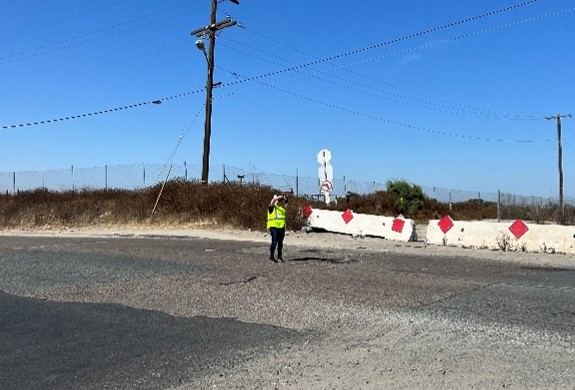
Photo: Scout’s Becky Diaz conducts a site visit as part of the preparation of an EIR Addendum for a roadway widening project.
- CEQA Requirements: Under CEQA Guidelines Sections 15162 and 15164, project changes, altered circumstances, or new information may warrant additional environmental documentation. Depending on the circumstances, an addendum, subsequent or supplemental environmental document, or no additional documentation may be appropriate.
- NEPA Re-Evaluations: Federal agencies evaluate whether existing NEPA documentation remains valid under applicable agency procedures. A documented re-evaluation may confirm that the original analysis remains adequate, identify a need for additional supporting information, or determine that supplemental environmental review is necessary.
5. The Key to Avoiding Delays: Early Environmental Coordination
Proactive environmental planning and coordination throughout project development can help anticipate design changes, minimizing the need for additional environmental review.
- Anticipating Design Refinements: Developing environmental document project descriptions that account for reasonably foreseeable design modifications and maximum anticipated disturbance limits can provide flexibility as engineering progresses. Evaluating these potential changes during initial environmental review can help reduce the likelihood of additional environmental analysis or reexamination during final design.
- Proactive Design Reviews: Involving environmental specialists at key design milestones allows project teams to identify potential impacts while engineering solutions remain flexible. Integrating environmental reviews into routine design coordination can help address potential issues before plans are finalized. Waiting until design completion or a construction change order is ready for approval can limit opportunities to avoid environmental impacts and may result in unexpected surveys, a disruption in agency coordination, or design revisions.
- Supporting Project Delivery: Tracking design modifications against the environmentally cleared project, maintaining updated environmental commitments, and coordinating with regulatory agencies can help minimize compliance risks and help avoid reexamination.
How Scout Can Help
Scout works alongside project owners and engineering teams to navigate environmental requirements beyond initial project clearance. From evaluating design modifications and conducting environmental reexaminations to tracking mitigation commitments, and supporting design-phase environmental compliance, our team helps identify potential issues early and keeps projects moving. For assistance with CEQA/NEPA compliance and environmental reexaminations, contact us today at hello@scoutenv.com.










 Headquarters: San Diego
 Staff Nationwide and in Hawaii