
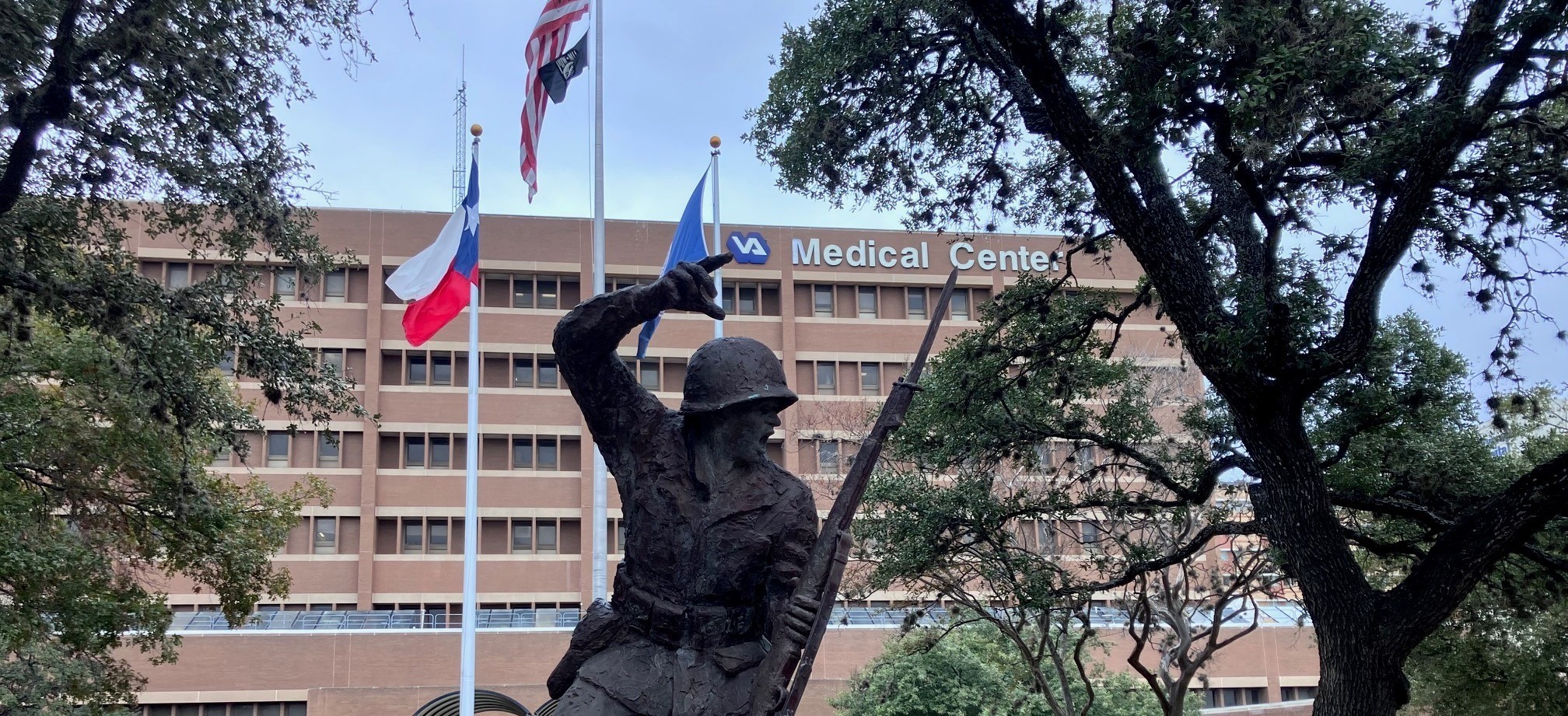

Every so often, a regulatory update comes along that is more than just a citation change, a definition clarification, or changing happy to glad. It has weight. Purpose. Impact. And importantly, clear instructions to effect positive change. We found this and more in the U.S. Department of Veterans Affairs (VA) interim final rule to amend its procedures for implementing the requirements of the National Environmental Policy Act (NEPA). As NEPA planners (and Veterans on the receiving end of VA benefits), we are thrilled to summarize VA’s new implementing regulation for NEPA.
At first glance, it looked simple enough: new Categorical Exclusions (CATEXs), supplementary information, emphasis on what defines a major federal action, etc. But after a close review from the perspective of someone who has spent years managing and supporting NEPA projects for VA and other federal agencies, what stood out most was the overall intent of the changes:
VA is clearly signaling that environmental review must support efficient and informed decision-making, not slow it down.
Since VA last updated its NEPA regulations in 1989, there have been several changes to NEPA. VA has also advanced in delivering care and benefits to Veterans. The revisions (published as an interim final rule effective June 15, 2026[1]) reflect the changes in both areas and ultimately aim to improve the efficiency and quality of VA’s NEPA process. The resulting revisions align the NEPA and decision-making process by putting emphasis on the early planning stages of VA actions (scoping), fostering consistent NEPA application throughout VA, embracing programmatic approaches, and establishing a useful range of CATEXs.
These changes do not mean less environmental review. Rather, they mean focusing effort where it adds value and eliminating extraneous time and money that does not help a project team or decision-maker make a better determination. In many ways, VA is refocusing on the original intent of NEPA itself: using environmental planning as a tool for making informed decisions.
Public Involvement Must Be Flexible
One word that appears prominently throughout the public involvement provisions is “may.” The procedures provide VA discretion to determine when public meetings, public comment opportunities, or additional outreach would meaningfully contribute to the decision-making process.
Under the revised procedures, public involvement remains an important part of the NEPA process, particularly for actions requiring an Environmental Impact Statement (EIS). However, the changes provide VA greater discretion in determining the appropriate level of public engagement for a particular action. Rather than applying the same process to every project, VA may tailor public involvement based on the complexity of the proposed action, the environmental issues involved, and the information needed to support well-informed decision-making.
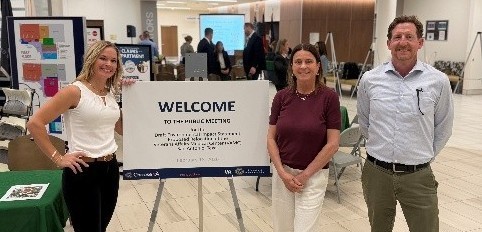
Scouts Callie, Roxanne Beasley, and Ryan (left to right) at a recent VA Draft EIS public meeting.
Proactive scoping informs NEPA analysis and timelines. VA recognizes how information sharing at the beginning of the NEPA process can inform, alleviate, and elicit public participation/concerns. As such, in § 26.42, VA standardizes the procedures for scoping. For EAs and EISs, scoping may inform VA as to the level of interest and information available from stakeholders. The process is especially important when local stakeholder identify issues or resources. For example, a state or local agency may bring to VA’s attention the presence of a community resource that, to that point, had not been known. VA can then ensure appropriate consideration of the potential effects to the resource, ensuring thorough analysis. If scoping does not generate much or any interest, VA can then adjust their approach and accelerate the project timeline.
The broader theme applies here: focusing effort where it provides the greatest value. Projects with substantial environmental concerns or public interest will continue to warrant robust public engagement, while more routine actions may not require the same level of process to achieve informed and transparent decision-making. Thus, more routine actions can accelerate their NEPA compliance and project delivery to Veterans.
Expanded Opportunities for Using Categorical Exclusions
Section 26.30 identifies 28 categories of actions that are excluded from further NEPA review. This list of 28 CATEXs replaces the 13 CATEXs developed in 1989. Since 1989, VA has added new programs and missions, which have informed VA as to the types of actions that do not generate significant effects. That doesn’t automatically mean every project qualifies for a CATEX. What it does mean is that many routine actions such as
- facility upgrades,
- leases,
- property acquisitions,
- utility replacements,
- energy projects, and
- cemetery improvements
now have clearer, faster pathways through environmental review. Of particular note are the actions associated with CATEXs 8 and 20, which are germane to the types of activities VA regularly performs. CATEX 8, Acquisition of land and/or buildings, enables VA’s transfer of property ownership when the land will remain undisturbed in the near term (generally defined as approximately five years). CATEX 20, New construction, covers consistent construction on existing VA properties and notably, the acquisition or property and subsequent construction when construction does not exceed a total building footprint of 75,000 square feet and/or 20 acres of interment space associated with an existing cemetery. These and the other CATEXs now cover routine actions with well-understood environmental consequences; thus, future qualifying actions will benefit from a more efficient environmental review process.
Extraordinary circumstances still matter. Related to the use of the new CATEXs, one of the most notable changes is the way VA addresses extraordinary circumstances. For years, NEPA planners have treated extraordinary circumstances as a near automatic trigger for additional NEPA documentation (usually in form of an EA). If a project involved listed species, historic properties, wetlands, floodplains, or another sensitive resource, the assumption was often that CATEX use was immediately in question.
VA’s revised regulations take a more nuanced approach. Rather than focusing primarily on the presence of specific resources, the extraordinary circumstances review focuses on factors such as unresolved compliance issues, uncertain environmental effects, unique or unknown risks, potential legal conflicts, and actions that could establish precedent for future decisions. The mere presence of an extraordinary circumstance no longer prevents the application of the CATEX. That may sound like a subtle distinction, but it has real implications for project delivery.

Charles George Department of Veterans Affairs Medical Center, Asheville, NC
To us, this reinforces what good environmental planning should be: applying professional judgment, soliciting stakeholder engagement, evaluating impacts, and building a defensible record that supports informed decision making.
Programmatic NEPA Takes Center Stage
For years, agencies have talked about tiering and programmatic reviews, but many projects still start from scratch when it comes to environmental compliance. Either planners aren’t aware of programmatic approaches, they’re hesitant to use them, or they just have not been prepared.
To resolve these inefficiencies, VA has added effective approaches to NEPA regarding development and use of programmatic NEPA Documents (§ 26.70), reliance on existing NEPA documents (§ 26.71), combining documents (§ 26.72), and supplemental analyses (§ 26.73). The consistent and proper application of these provisions will reduce or eliminate redundant analysis, without sacrificing the level of analysis or informed decision making.
Scout has seen firsthand how effective this approach can be, having supported the recent preparation of three Programmatic EAs (PEAs) for VA. These PEAs evaluated recurring actions associated with leased medical facilities, state homes, and national cemetery operations and improvements across the United States and its territories. By evaluating common environmental effects at a programmatic level, VA can focus future project reviews on site-specific issues rather than repeatedly analyzing the same activities. This is a huge resource saver for VA.
The Bigger Picture: This Isn’t Just About VA
VA is not in a vacuum. What we’re seeing from VA is part of a larger shift occurring across the federal government as agencies refine their own approaches to implementing NEPA. The NEPA statute remains the same, but with the rescinding of CEQ’s NEPA implementing regulations, NEPA compliance has become increasingly agency specific. In many ways, it feels like we are returning to a time when understanding an agency’s culture, mission, stakeholders, and decision-making process is just as important as understanding the NEPA statute itself.
Also, what’s not written but is implied from the changes is how flexible and enduring these regulations will be for VA. Given the NEPA “whiplash” we’ve seen over the past two administrations, if the past is any indication of what’s to come, we’re in for more changes to NEPA implementation in the decades ahead. Thus, by purposely using specific conditional language (such as “may” or “choose”), VA has given themselves the ability to respond to political changes without (hopefully) having to frequently overhaul their NEPA implementing regulations.
Final Thoughts
One of the reasons we got into environmental planning was because we genuinely believe in the spirit of NEPA. At its core, NEPA isn’t about producing documents. It’s about making informed decisions. It’s about understanding potential environmental consequences early enough to avoid or minimize impacts, consider alternatives, and ultimately make better informed decisions before project implementation.
At Scout, we believe environmental planning works best when it is integrated into project planning from the beginning. After reading VA’s revised regulations, VA sees it the same way.
The projects that will be most successful under this new framework won’t necessarily have the longest environmental documents. They’ll be

Fort Rosecrans National Cemetery, San Diego, CA
the projects that identify constraints early, coordinate compliance efforts effectively, and produce analyses that are clear, focused, and useful to decision-makers.
While this proposed interim final rule applies specifically to VA, we continue to see this broader trend across federal agencies. As agencies refine their own NEPA implementing procedures, successful project teams will be the ones that apply environmental planning as NEPA intended; not as a box to check, but as a tool to support better informed decisions and faster project delivery.
To us, that’s very much in line with the original spirit of NEPA. The goal was never to produce more paperwork. The goal was to make better informed decisions. And if these revisions accomplish that, the real benefit won’t be a shorter process or a different document. It will be helping VA make informed decisions that support its mission and accelerate the delivery of modern facilities, care, and benefits Veterans have earned through their sacrifice and service.
This blog was independently prepared by Scout. It does not represent the views of, nor has it been endorsed by, VA.
Contact us at hello@scoutenv.com to discuss how we can help accelerate your NEPA project.
[1] Comments on the interim final rule must be received by July 5, 2026 via www.regulations.com under RIN 2900-AS33.









 Headquarters: San Diego
 Staff Nationwide and in Hawaii