
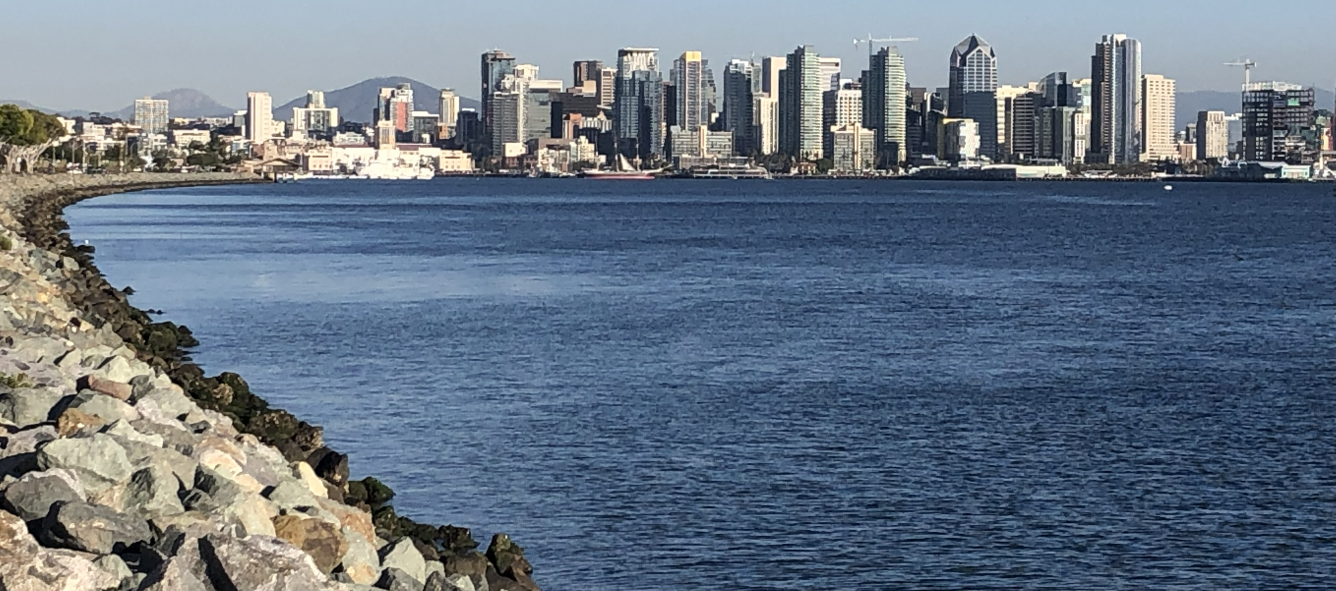
On October 23, 2025, I was honored to deliver a presentation titled “San Diego Bay Sediment Remediation: A Historical Overview” at the annual Western Dredging Association (WEDA) Pacific Chapter conference in Waikiki, Hawaii. The presentation was co-authored by Camille Sytko, Environmental Scientist/Planner with Scout. The goal of the presentation was to highlight the significant progress that has been made in the clean-up of sediment contamination “hot spots” in San Diego Bay as well as to present continuing efforts to sustain these ongoing successes. The following is a brief overview of what was presented during my talk.
The Legacy of Industrialization
San Diego Bay’s rich industrial history significantly contributed to the region’s economy but also created complex environmental challenges, particularly sediment contamination. Various industries introduced pollutants into the bay over a century:
• Tuna Canneries: Once the “Tuna Capital of the World,” numerous canneries lined San Diego Bay and contributed organic matter and processing waste to the sediments.
• Naval Operations & Shipbuilding: Over a century of intensive naval activities, ship maintenance, and repair introduced various pollutants.
• Boatyards: Boat repair facilities, primarily located in America’s Cup Harbor (formerly known as Commercial Basin), were responsible for the release of copper and other metals to the sediments as a result of boat maintenance activities such as bottom scraping and painting.
• Material Transport: Liquid and dry bulk facilities, along with supporting rail operations, led to potential spills and runoff.
• Lumber and Wood Treatment: The historical use of creosote at lumber mills and wood treating facilities introduced significant levels of polycyclic aromatic hydrocarbons (PAHs).
• Power Plants & Manufacturing: Legacy power plants released contaminants like mercury and copper.
• Aircraft Manufacturing: The production of aircraft in the area, particularly during World War II and the Cold War, was a major industrial activity in San Diego.
These diverse activities collectively underscore the significant impact early industrial development had on the aquatic environment, ultimately necessitating comprehensive sediment remediation efforts in San Diego Bay.
The Sewage Crisis and a Turning Point
Industrial contamination was exacerbated by a severe sewage crisis. Initially, up to 50 million gallons of raw sewage and industrial waste were dumped directly into the water daily. While the first local treatment plant opened in 1935, rapid population growth quickly overwhelmed it.
The escalating pollution led the County Health Department to ban human contact with the water. One regulator famously described the bay’s consistency as similar to “brown split pea soup,” sparking significant worry about the impact on the vital tourism industry. A long-term solution finally arrived in 1963 with the opening of the Point Loma Wastewater Treatment Plant, a crucial turning point in the bay’s history.
Decades of Successful Remediation Efforts
Numerous sediment remediation projects have been performed in San Diego Bay over the last 40 years. These included cleanups at boatyards, shipyards, a former copper ore loading facility, a boat channel receiving stormwater runoff, and former aviation manufacturing plants.
Common Contaminants of Concern
- Heavy metals (especially copper and mercury)
- PCBs
- PAHs
- Tributyltin (an antifoulant boat paint)
- Chlorinated pesticides (such as DDT and chlordane)
Remediation Approaches
A variety of remediation remedies have been implemented to clean up the bay’s sediments, including:
- Dredging with landfill disposal
- Dredging with landfill disposal and sand cover
- The construction of engineered sediment caps
- Enhanced natural recovery using a carbon-amended cap
- Dredging with on-site upland fill and asphalt cover
The San Diego Bay sediment cleanups have encompassed more than 50 acres and over 250,000 yd³ of contaminated sediments have been removed for the aquatic environment.
Key Takeaways
• Significant Transformation: The character of San Diego Bay has changed significantly over the past century from heavy industry to more diversified uses with a heavy emphasis in recreation and natural resources management.
• Vastly Improved Conditions: Marine resources and water quality are in much better shape now than they have been in the past 100 years. The bay is no longer “brown split pea soup” but a vital “blue jewel.”
• Progress on Legacy Sites: Excellent progress has been made in the remediation of legacy contaminated sediment sites, including the removal of almost all creosote-treated wood wharf and pier pilings.
• Effective Regulation: Pollution abatement efforts, such as stormwater pollution controls and Clean Water Act and Porter-Cologne Act permitting, have contributed significantly to improved environmental conditions.
• Future Work: Additional sites are currently under investigation, and future remediation is likely needed to address remaining “hotspots” of contamination.
At Scout, we’re proud to support projects that restore and protect aquatic environments through science-driven solutions and decades of expertise. If you’re planning a remediation, restoration, or environmental assessment project, contact us at hello@scoutenv.com to learn how one of our qualified scientists can help.












 Headquarters: San Diego
 Staff Nationwide and in Hawaii